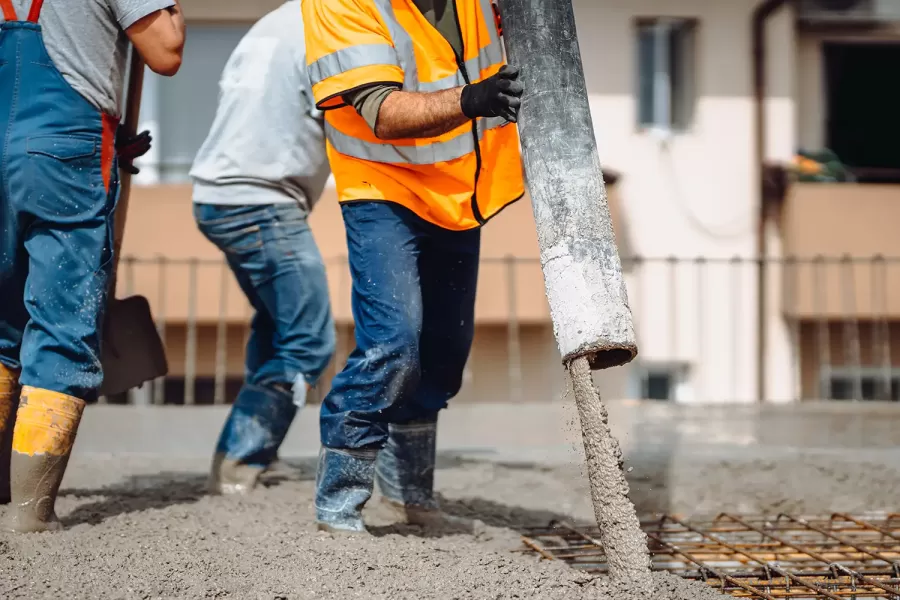
How long does it take a concrete floor to set?

The setting time of a concrete floor can vary based on several factors, including the type of concrete mix, environmental conditions, and the specific use case. Here are the typical stages and timeframes for concrete to set and cure:

1. Initial Setting Time:

   – Duration: Approximately 24 to 48 hours.

   – Details: During this period, the concrete hardens enough to be walked on, but it is not fully cured. This initial setting allows for the finishing touches to be applied to the surface.

2. Partial Cure:

   – Duration: Around 7 days.

   – Details: Concrete reaches about 70% of its full strength. It’s strong enough to handle light foot traffic and other light loads. During this period, curing methods (like keeping the surface moist) are often applied to ensure proper hydration and strength development.

3. Full Cure:

   – Duration: 28 days.

   – Details: Concrete typically reaches its full design strength. At this stage, it can support its full load-bearing capacity and handle heavy use.

Factors Influencing Setting Time:

– Temperature: Higher temperatures can accelerate the setting process, while lower temperatures can slow it down.

– Humidity: Adequate moisture is crucial for curing. Dry conditions can cause the concrete to set too quickly, leading to potential cracking.

– Concrete Mix: Additives and the water-to-cement ratio can alter setting times. For example, accelerants can speed up the setting time, while retarders can slow it down.

– Thickness of the Slab: Thicker slabs may take longer to set and cure compared to thinner ones.

Practical Tips:

– Do not overload: Avoid placing heavy loads on the concrete floor until it has fully cured (28 days).

– Curing Methods: Use appropriate curing methods, such as covering with plastic sheets, applying curing compounds, or keeping the surface moist to ensure optimal strength development.

Understanding these timelines and factors helps ensure the concrete floor achieves its intended strength and durability.

The Art of Concrete Screed: A Comprehensive Guide by GB Concrete & Pump

In the realm of construction, the importance of a solid foundation cannot be overstated. Whether it’s for residential, commercial, or industrial purposes, the integrity of the flooring sets the stage for the entire structure. This is where concrete screed steps into the spotlight, offering a robust solution for achieving level surfaces with optimal strength and durability.

At GB Concrete & Pump, we pride ourselves on delivering high-quality concrete solutions tailored to the unique needs of our clients. Today, we delve into the world of concrete screed, exploring its various applications, advantages, and why our offerings stand out in the industry.

Concrete vs. Floor Screed: Understanding the Difference

Before diving into the specifics of screed, it’s crucial to distinguish between concrete and floor screed. While both materials share similarities, they serve distinct purposes in construction projects.

Concrete, renowned for its versatility and strength, forms the structural foundation of buildings and infrastructure. It’s typically composed of a mixture of cement, water, aggregates, and additives, providing the necessary support for heavy loads and structural stability.

On the other hand, floor screed serves as a level substrate for floor finishes, such as tiles, wood, or carpet. Unlike concrete, screed is finer in texture, facilitating a smooth and even surface. It’s applied over concrete substrates or insulation layers to achieve the desired levelness before the final flooring is installed.

Screed for Underfloor Heating: Enhancing Comfort and Efficiency

One of the notable applications of screed is in underfloor heating systems, where it plays a crucial role in optimising thermal conductivity and heat distribution. By embedding heating pipes or cables within the screed layer, buildings can enjoy efficient and uniform heating, minimising energy consumption and enhancing comfort levels.

Our specialized screed mixes are engineered to accommodate underfloor heating systems, ensuring optimal performance without compromising structural integrity. With our expertise, clients can enjoy the benefits of a seamless integration between screed and heating systems, resulting in superior comfort and energy efficiency.

GB Concrete & Pump’s Screed Delivery: Efficiency at Your Doorstep

At GB Concrete & Pump, we understand the importance of efficiency and precision in construction projects. That’s why we offer hassle-free screed delivery services, tailored to meet the specific requirements of each project.

Our state-of-the-art delivery fleet ensures prompt and reliable transportation of screed directly to the construction site, eliminating delays and logistical challenges. Whether it’s a small-scale renovation or a large-scale development, our experienced team is equipped to deliver the right quantity of screed, precisely when and where it’s needed.

Wet vs. Dry Screed: Choosing the Right Solution

When it comes to screed installation, you can often face the decision between wet and dry screed methods. Each approach offers unique benefits and considerations, depending on the project requirements and timeline.

Wet screed involves pouring a liquid mixture of cement and sand directly onto the substrate, allowing it to self-level and cure over time. This method offers fast installation and excellent bond strength, making it ideal for large-scale projects with tight deadlines.

In contrast, dry screed, also known as pre-mixed or flowing screed, involves the use of pre-mixed screed materials that are pumped or poured onto the substrate. This method offers precise control over thickness and levelness, making it suitable for projects with specific tolerance requirements.

At GB Concrete & Pump, we offer both wet and dry screed solutions, customized to meet the unique needs of each project. Our expert team works closely with clients to determine the most suitable method based on project specifications, budget, and timeline.

Conclusion

In the realm of construction, concrete screed stands as a cornerstone for achieving level, durable, and structurally sound flooring. From its applications in underfloor heating systems to its role in providing a smooth substrate for floor finishes, screed plays a pivotal role in shaping the built environment.

At GB Concrete & Pump, we’re committed to delivering premium-quality screed solutions tailored to the diverse needs of our clients. With our expertise, cutting-edge technology, and dedication to excellence, we’re your trusted partner in bringing your construction projects to life.

For superior screed solutions that meet and exceed expectations, choose GB Concrete & Pump. Get in touch with us today to learn more about our services and how we can support your next project.


Building Strong Foundations before concrete pour

Building Strong Foundations: The Crucial Importance of Quality Concrete in Construction

Introduction

In the world of construction, the strength and durability of a building depend significantly on the quality of its foundation. At the core of this foundation lies one essential component: concrete. In this blog, we delve into the importance of using high-quality concrete in construction projects, emphasising its far-reaching implications for safety, longevity, and overall project success.

1. The Backbone of Construction

Concrete is often referred to as the backbone of construction, and for good reason. It serves as the primary material for foundations, slabs, columns, and other critical structural elements. The quality of the concrete used in these components directly influences the building’s ability to withstand various stresses and challenges over time.

2. Ensuring Structural Integrity

Strength and Load-Bearing Capacity:

High-quality concrete possesses superior strength, ensuring that structures can bear heavy loads without succumbing to stress. This characteristic is especially crucial in large-scale construction projects common in today’s urban environments.

Durability and Longevity:

Quality concrete is designed to withstand the test of time. It resists environmental factors such as freeze-thaw cycles, chemical exposure, and abrasion, contributing to the longevity of the structure and reducing the need for frequent repairs.

3. Safety First

Resilience to Natural Disasters:

In regions prone to earthquakes or other natural disasters, the use of quality concrete becomes a matter of safety. Properly designed and cured concrete structures exhibit greater resilience, providing a safer environment for occupants.

Fire Resistance:

High-quality concrete offers excellent fire resistance, a crucial factor in ensuring the safety of buildings and their occupants. It acts as a barrier, slowing down the spread of flames and providing valuable time for evacuation.

4. Economic Efficiency and Sustainability

Reduced Maintenance Costs:

Investing in quality concrete upfront may seem like a higher initial cost, but it pays off in the long run by reducing maintenance expenses. Structures built with high-quality concrete require fewer repairs and replacements, saving both time and money.

5. Environmental Sustainability

Sustainable construction practices are gaining prominence. Quality concrete can be produced with environmentally friendly additives, and its longevity reduces the need for frequent reconstruction, thereby minimizing the environmental impact of the construction industry.

Conclusion

In essence, the importance of quality concrete in construction cannot be overstated. It forms the bedrock upon which safe, resilient, and enduring structures are built. As the construction industry continues to evolve, prioritizing the use of high-quality concrete is not just a best practice; it is a fundamental necessity for creating a built environment that stands the test of time. So, the next time you witness a towering skyscraper or a sturdy bridge, remember that it all begins with the quality of the concrete beneath your feet.

Concrete Pumping in Birmingham

The Ultimate Guide to Concrete Pumping in Birmingham: Enhancing Construction Efficiency

Introduction

When it comes to construction in the vibrant city of Birmingham, efficiency is key. Concrete pumping has emerged as a game-changer in the construction industry, offering numerous advantages over traditional pouring methods. In this comprehensive guide, we’ll explore the ins and outs of concrete pumping in Birmingham and highlight the significant benefits it brings to construction projects.

1. Understanding Concrete Pumping

Concrete pumping is a technique that involves the use of specialised machinery to transfer liquid concrete through a pipeline. This method replaces the traditional manual pouring, providing a more precise and efficient solution for construction projects.

2. Benefits of Concrete Pumping in Birmingham

Speed and Efficiency:

Birmingham is a bustling city with ongoing construction projects. Concrete pumping significantly speeds up the process, allowing for faster project completion. This efficiency is crucial in meeting tight deadlines and reducing overall construction time.

Precision in Placement:

The precision offered by concrete pumping ensures that the concrete is placed exactly where it’s needed. This is particularly beneficial in Birmingham’s urban environment, where space constraints often pose challenges for traditional pouring methods.

Cost-Effective Solutions:

While concrete pumping may seem like an initial investment, it proves to be cost-effective in the long run. Reduced labour costs, quicker project completion, and minimised material wastage contribute to overall savings for construction projects in Birmingham.

Minimising Disruptions:

Construction activities in a busy city like Birmingham can cause disruptions. Concrete pumping minimises these disruptions by streamlining the construction process. This is especially advantageous in areas with high foot traffic or near residential areas.

3. Tailoring Concrete Pumping to Birmingham’s Needs

Navigating Urban Challenges:

Birmingham’s urban landscape often demands manoeuvring through tight spaces. Concrete pumping equipment is designed to handle such challenges, making it the ideal choice for construction in the city.

Weather Resilience:

Birmingham experiences a range of weather conditions. Concrete pumping is resilient to weather changes, ensuring that construction projects can proceed smoothly regardless of rain, snow, or other weather challenges.

Conclusion

In conclusion, concrete pumping stands out as a crucial solution for construction projects in Birmingham. Its speed, precision, cost-effectiveness, and adaptability to local challenges make it the preferred choice for contractors aiming to enhance efficiency and deliver high-quality results. As the city continues to evolve, embracing modern construction techniques like concrete pumping becomes imperative for successful and timely project completion in Birmingham.