
Author: gbconcrete

Filling Suspended Floors in Older Houses for Lasting Stability

Many older homes in Birmingham and across the West Midlands feature suspended timber floors — a common construction method in Victorian, Edwardian, and pre-1960s properties. While these floors served their purpose for decades, they often develop issues over time. At GB Concrete & Pump, we frequently help homeowners upgrade these with modern ready mix concrete Birmingham solutions. This creates solid, durable ground floors that improve comfort, efficiency, and property value.

What Are Suspended Floors?

Suspended floors consist of timber joists spanning between walls or sleeper walls, with floorboards laid on top. A ventilated void (crawl space) sits underneath, originally designed to manage moisture and prevent direct ground contact with the timber. Air bricks in external walls allow airflow to keep the area dry.

This system worked well in the past but struggles with modern living standards and the effects of time.

Common Problems with Older Suspended Floors

Over decades, suspended timber floors can develop several issues:

  • Rot and Decay: Poor ventilation, rising damp, or blocked air bricks lead to moisture buildup, causing joists and boards to rot.
  • Woodworm and Pests: The void provides a perfect habitat for insects.
  • Draughts and Cold: Gaps and poor insulation make rooms feel cold and increase energy bills.
  • Structural Weakness: Bounce, creaking, or sagging floors indicate weakening joists, posing safety concerns.
  • Damp and Mould: Inadequate moisture control affects air quality and can damage nearby walls or finishes.

These problems often worsen during renovations or extensions, making a full upgrade worthwhile.

The Process of Filling Suspended Floors with Ready Mix Concrete

Filling a suspended floor involves converting the void into a solid base. Professional contractors typically follow these key steps (always consult a structural engineer and comply with building regulations):

  1. Preparation and Removal: Lift and remove old floorboards and rotten joists. Clear debris from the void and assess the ground.
  2. Ground Preparation: Compact hardcore (crushed stone/rubble) in layers (often 100-300mm+ depending on depth) using a plate compactor. Add sand blinding for a smooth surface.
  3. Damp Proofing: Install a damp-proof membrane (DPM) to prevent moisture rising. Consider insulation for better thermal performance.
  4. Pouring Concrete: Use high-quality ready mix concrete for consistency and strength. For deeper voids, build up in layers or use suitable mixes. Concrete pumps make placement efficient, especially in tight or hard-to-reach areas.
  5. Finishing: Level and cure the slab properly. Add a screed layer for a smooth finish suitable for tiles, wood, or carpet. Underfloor heating can integrate here too.

The exact method depends on void depth, site conditions, and load requirements. Professional assessment ensures compliance and longevity.
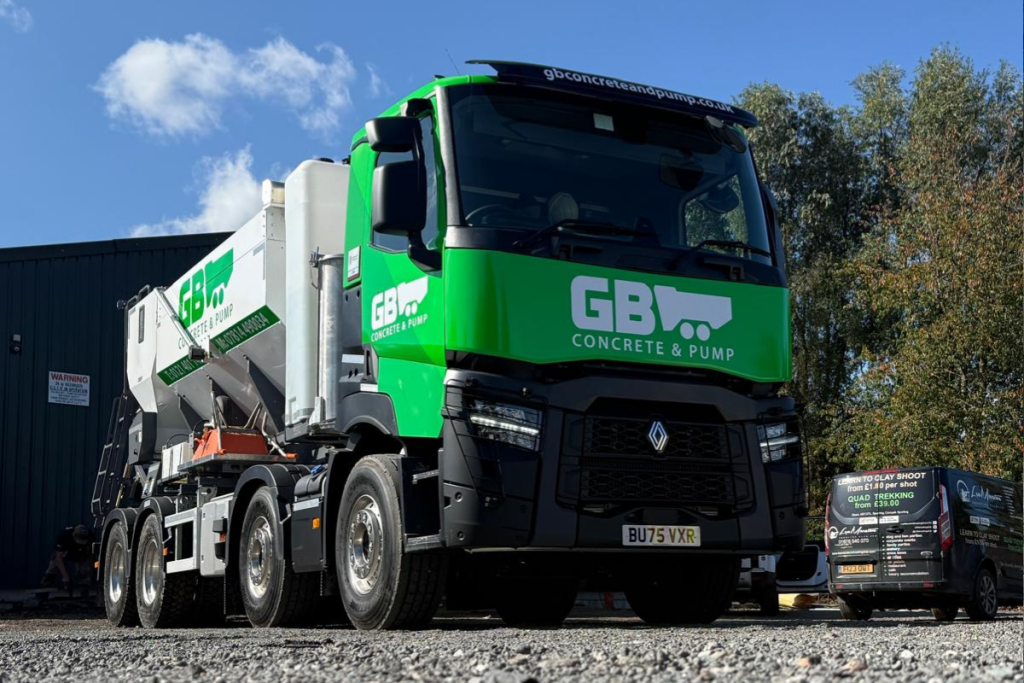
ready mix concrete birmingham

Benefits of Filling Suspended Floors

Switching to a solid concrete floor offers significant advantages:

  • Improved Stability and Durability: Eliminates bounce, creaks, and rot risks for a solid, long-lasting base.
  • Better Damp Control: Proper DPM and concrete reduce moisture issues.
  • Energy Efficiency: Easier insulation integration lowers heat loss and energy bills.
  • Modern Comfort: Smoother surfaces suit contemporary flooring and underfloor heating.
  • Increased Property Value: Upgraded homes appeal more to buyers and meet higher standards.
  • Low Maintenance: Ready Mix Concrete resists pests and decay far better than timber.

Many homeowners notice warmer rooms and fewer draughts immediately.

How GB Concrete & Pump Can Help

At GB Concrete & Pump, we specialise in supplying and delivering premium ready mix concrete in Birmingham and the Midlands for projects like suspended floor upgrades. Operating for over 10 years we can support you with:

  • Volumetric/On-Site Mixing — Pay only for what you use — ideal for renovations with variable needs.
  • Concrete Pumping — Precise placement into voids or awkward spaces with line or boom pumps.
  • Concrete Screed — Smooth, level finishes for your final flooring.
  • Expert Advice — From quantity calculations to project tips.

Our reliable service, competitive pricing, and commitment to quality make us the go-to team for domestic and commercial concrete work in Birmingham, Sutton Coldfield, Solihull, and surrounding areas.

Whether you’re tackling a full renovation or a targeted floor upgrade, we provide fast quotes, same/next-day options where possible, and professional support throughout.

Ready to Upgrade Your Suspended Floor?

Visit our Concrete Calculator to find out how much concrete you need or call us to get started. Transform your older home with expert concrete solutions you can trust.

Birmingham Construction Labour Shortages: How On-Site Volumetric Mixing Saves Time and Money

If you’ve been involved in any building work around Birmingham lately, you’ll know exactly what I’m talking about. Finding reliable lads for the job has become a proper headache. Whether it’s a new extension in Harborne, a factory unit in Aston, or housing developments pushing out towards Sutton Coldfield, the skilled hands just aren’t there like they used to be.

The West Midlands is throwing serious cash at the problem — £75 million to train over 12,000 new workers over the next few years — but that won’t fix things overnight. In the meantime, projects are dragging on, costs are creeping up, and contractors are turning down work because they can’t staff it. That’s where smart choices on materials and methods can make all the difference.

Why the Labour Crunch Hits Birmingham So Hard

We’re in one of the busiest construction regions in the country right now. Between HS2 leftovers, city centre regeneration, new homes targets, and all the commercial builds, demand is sky high. But the workforce is aging, fewer young people are coming into trades, and Brexit plus other factors thinned out the pool. Local firms are competing hard for the same brickies, groundworkers, and concretors.

On a typical job, that means your team spends more time waiting around — for deliveries, for the right mix to show up, or just trying to stretch the crew they do have. Every hour wasted is money lost, especially when you’ve got tight access, residents next door, or council deadlines breathing down your neck.

Enter Volumetric Mixing — The Practical Way Forward

This is where switching from traditional Birmingham ready mix concrete deliveries to on-site volumetric mixing really starts to shine. Instead of relying on big mixer trucks turning up with a fixed load that’s already ticking, you get a volumetric truck that mixes fresh concrete right there on your site, in exactly the quantities and mixes you need, when you need them.

No more over-ordering by a couple of cubes “just in case.” No more watching a load go off because the pump was late or the gang got held up. You produce what you pour.

Real Savings on Labour and Time

Here’s the bit that matters most when you’re short-handed:

  • Fewer bodies needed on the pour. Traditional ready-mix often needs a bigger team to keep up with the clock — one load after another before it goes off. With volumetric, you control the flow. Smaller, more efficient crews can manage it without rushing or cutting corners.
  • No waiting games. Traffic in Birmingham is a nightmare at the best of times — trying to get a ready-mix truck through Digbeth or Edgbaston during rush hour can turn a straightforward job into a saga. Volumetric trucks carry the raw materials and mix on demand, so you’re not sat there with an idle gang burning through the day rate.
  • Less waste means less clearing up. That leftover concrete you paid for but couldn’t use? It costs labour to deal with as well as money. Volumetric cuts that right down.
  • Flexibility for changes. Spot a problem mid-pour or need a slightly different mix for a tricky section? You can adjust it there and then instead of sending for another load and losing half a day.

Contractors we’ve spoken to locally reckon they’re shaving 20-30% off labour time on concrete jobs by going this route. In a city where every skilled hour counts, that adds up fast.

Not Just for the Big Boys

A lot of people assume volumetric is only worth it on massive commercial sites. Not true. For domestic extensions, driveways, or smaller commercial pads across the West Midlands, the benefits stack up even more. You avoid the minimum load charges, the short-notice delivery dramas, and the stress of coordinating everything perfectly with a stretched crew.

At GB Concrete & Pump, we’ve seen it time and again — jobs that used to need tight coordination with multiple ready-mix deliveries now run smoother, finish quicker, and come in under budget.

The Bottom Line for Birmingham Builders

The labour shortage isn’t going away anytime soon, even with all the training investment. Smart operators are the ones looking at every part of the process to do more with what they’ve got. On-site volumetric mixing isn’t flashy tech — it’s practical, reliable, and directly tackles the pain points we’re all feeling right now.

If you’re fed up with watching your margins disappear because of delays and staffing headaches, it might be time to rethink how you source your concrete.

Give us a ring or drop us a message — we can run the numbers on your next job and show you exactly what the switch could save you in Birmingham conditions. No hard sell, just honest advice from lads who understand the local game.

Concrete Screed vs Traditional Flooring

Which One Should You Choose for Your Project?

If you’re planning a new floor — whether it’s for a house extension, a new garage, a commercial unit, or even sorting out a wonky old concrete slab, you’ll eventually hit the same question: do I just pour concrete and finish it, or do I need a screed on top?

We get asked this all the time at GB Concrete & Pump. Both materials are made from cement, sand, and water, but they do very different jobs. Getting the choice wrong can mean extra cost, longer waiting times, or a floor that never quite looks or performs right.

So, What’s the Difference?

Traditional concrete flooring is the tough stuff. It’s mixed with larger, coarser aggregates (think gravel and stones) which give it serious strength and durability. This is what you use for the main structural slab — foundations, driveways, industrial floors, or anywhere that needs to take real punishment.

It’s laid thicker, usually starting at 100mm for domestic work and going up to 150-200mm+ for commercial or heavy-use areas. The surface comes out rougher, which is fine if you’re leaving it as a hardwearing floor or adding a separate finish later.

Concrete screed, on the other hand, is the finishing layer. It uses much finer sand and a smoother mix, so it creates a level, even surface that’s perfect for laying tiles, vinyl, laminate, wood, carpet, or resin. Screed is nearly always poured on top of a structural concrete base (or sometimes insulation for floating floors).

Typical thicknesses:

  • Bonded screed (stuck straight to the concrete): 25–40mm
  • Unbonded or floating screed: 50–75mm or more

In short: concrete gives you the muscle. Screed gives you the smooth, flat finish.

Pros and Cons – Keeping It Real

Traditional Concrete Floor

  • Pros: Cheaper per square metre, incredibly strong, great for exposed or hardwearing surfaces, can be polished or sealed for a modern industrial look.
  • Cons: Harder to get perfectly level without extra work (grinding, levelling compounds), longer initial setting time, and the surface is naturally rougher. Not ideal if you want a crisp finish for tiles or underfloor heating.

Concrete Screed

  • Pros: Excellent level and smooth finish, faster to get right for final floor coverings, works brilliantly with underfloor heating (especially liquid/flowing screeds), thinner layers possible in many cases, and it can dry quicker than a full structural pour in some formulations.
  • Cons: It’s not structural on its own — it needs a solid concrete base underneath. Traditional sand-and-cement screed can take a long time to fully dry (roughly one day per mm of thickness up to 40mm, then slower after that), though fast-drying and liquid options change the game.

When Should You Choose Screed?

Most domestic and many commercial jobs benefit from a screed layer. Here are the times we’d usually recommend it:

  • You’re laying tiles, laminate, vinyl or engineered wood — these all need a flat, level base to avoid cracking or lipping later.
  • You’re installing underfloor heating. Screed (particularly flowing/liquid types) wraps around the pipes nicely and gives better heat transfer.
  • Renovation or extension work where the existing slab isn’t perfectly level.
  • You want a polished concrete-style finish but with a finer, more consistent surface.

If you’re doing a farm yard, heavy industrial slab, or driveway, you might not need screed at all — just a well-finished structural concrete pour.

Traditional Sand & Cement Screed vs Liquid/Flowing Screed

Even within screeds there’s a choice. Traditional sand-and-cement is still widely used, especially on smaller jobs or where you need to create falls (slopes for drainage in wet rooms). It’s labour-intensive to lay but very familiar to most groundworkers.

Liquid screeds are pumped in, self-level, and can cover huge areas quickly with far less manual finishing. They’re thinner, often dry faster (sometimes walkable in 24-48 hours), and are excellent over underfloor heating. They do tend to cost a bit more upfront, but the speed and quality can save time and money overall.

A Quick Cost and Time Reality Check

A basic concrete slab is usually the cheapest way to create the structure. Adding a screed increases the material and labour cost, but it can save you headaches (and money) when it comes to laying your final floor finish.

Drying times matter a lot too. Rushing a floor covering onto damp screed is one of the most common (and expensive) mistakes we see.

So… What Should You Do?

There’s no one-size-fits-all answer. For most house extensions, new builds, and commercial units in the West Midlands, we recommend a solid concrete structural slab followed by the right type of screed. It gives you the best combination of strength and a professional finish.

If you’re unsure, the best thing is to talk it through with us before you start. We can look at your project, the access, the final floor type, whether you want underfloor heating, and give you honest advice on what will work best — and what will keep the cost down without cutting corners.

At GB Concrete & Pump we supply and pump both screed and ready-mix concrete across Birmingham, the Black Country, Staffordshire, Worcestershire and surrounding areas. Volumetric mixing on site is also handy when you need exact amounts or want to avoid waste.

Got a project coming up? Drop us a message or give the office a ring. We’re happy to chat through your options and help you make the right call from the start.

How to Calculate the Right Amount of Concrete for Your Project

Getting the correct amount of concrete for your project is crucial. Order too little, and you risk delays and additional costs. Order too much, and you’re paying for materials you don’t need. Whether you’re working on a small domestic job or a large commercial pour, accurate calculation is the key to efficiency.

At GB Concrete & Pump, we understand how important precision is. That’s why we’ve made it easy with our online concrete calculator – a fast, reliable way to estimate exactly what you need.

Why Accurate Concrete Calculations Matter

Concrete isn’t just another material, it’s time-sensitive and often poured in one go. Miscalculations can lead to:

  • Project delays
  • Increased labour costs
  • Wasted materials
  • Structural inconsistencies

By calculating correctly from the start, you save time, money, and avoid unnecessary stress. Once you know the volume you need, you can order the right quantity of ready mix concrete for your project without unnecessary waste or delays. If quantities may change on the day, volumetric concrete offers extra flexibility because the mix is produced on site according to demand.

The Basics of Concrete Calculation

Concrete is typically measured in cubic metres (m³). To calculate the volume required, you need to know the dimensions of the area you’re filling.

For a simple rectangular slab:

Length × Width × Depth = Volume

For example:
If your slab is 5 metres long, 4 metres wide, and 0.15 metres deep:

5 × 4 × 0.15 = 3 cubic metres of concrete

Different Shapes, Different Calculations

Not all projects are simple rectangles. You may need to calculate concrete for:

  • Square Slab & Footings
  • Round Slabs & Columns
  • Fence Post Holes

Each shape has its own formula, which can quickly become complicated, especially if you’re working with multiple areas or varying depths.

Choosing the Right Concrete Grade

The amount of concrete isn’t the only factor, you also need the right strength (grade) for your application. For example:

  • Lower grades for pathways and non-structural areas
  • Higher grades for foundations and load-bearing structures

Selecting the correct grade ensures durability and compliance with building standards.

Make It Easy with Our Concrete Calculator

Instead of working through multiple formulas and conversions, you can use our online tool to do the hard work for you.

👉 https://www.gbconcreteandpump.co.uk/concrete-calculator/

Our concrete calculator allows you to:

  • Input dimensions quickly
  • Select the shape of your project
  • Choose the appropriate concrete grade
  • Get an accurate estimate

It’s designed to save you time and remove the guesswork, perfect for both DIY projects and professional jobs.

If you’re unsure about anything, the team at GB Concrete & Pump is always on hand to offer advice and support. Get in touch with us to discuss your requirements.

Spring Is Here… And So Are the Projects

As the days start getting a little lighter (even if the sunshine is still playing hard to get!), we’re more than ready to wave goodbye to the endless rain and say hello to spring projects here at GB Concrete & Pump.

The warmer ‘ish’ weather means one thing – sites are coming back to life, groundwork is picking up pace, and concrete pours are back in full swing. And just like every year, the phone is already ringing.

Spring Is Here… And So Are the Projects

After months of battling wet weather delays, everyone’s keen to get moving again. From extensions and driveways to commercial slabs and large-scale groundwork, we’re seeing the usual spring surge and then some.

Our diary is filling up quickly from early morning through to late afternoon pours, so if you’ve got a project coming up, now’s the time to get booked in.

Reliable Under Pressure – Especially Last Minute

If there’s one thing our customers know about us, it’s that we deliver even when the pressure’s on.

Last-minute job?
Site running behind schedule?
Another supplier let you down?

We’ve built our reputation on being reliable when it matters most. Our team understands that in construction, timing is everything. When you need concrete on-site, you need it on time, mixed right, and delivered professionally.

We pride ourselves on:

  • Prompt, dependable deliveries
  • Expert concrete pumping services
  • Flexible scheduling where possible
  • A team that understands the urgency of live sites

Spring might be busy, but we always do our best to accommodate urgent jobs wherever we can.

Introducing: Permeable Concrete

We’re also excited to announce the addition of Permeable Concrete to our product range.

With sustainable building becoming more important than ever, permeable concrete is a fantastic option for projects that require effective drainage solutions. It allows water to pass through the surface, reducing surface runoff and helping to manage stormwater naturally.

It’s ideal for:

  • Driveways
  • Car parks
  • Pathways
  • Commercial and residential developments

If you’re planning a project this season and want to explore more environmentally conscious options, ask us about permeable concrete when you get in touch.

The Site Is in Full Swing

Our site is running, the trucks are moving, and our team is out on-site every day. Spring has well and truly kicked us into gear.

But with demand rising fast, we’re already getting booked up from morning through to evening slots. We hate turning people away, so securing your slot early is the best way to avoid delays to your project.

Ready to Get Started?

Whether you’re planning ahead or need a quick turnaround, we’re here to help.

📞 Call us on 0121 4011 411
💬 WhatsApp us on 07814 490 034
🌐 Or book via our website: gbconcreteandpump.co.uk/contact

Let’s make the most of the brighter days (whenever they fully arrive!) and get those spring projects underway.

GB Concrete & Pump – reliable under pressure, whatever the weather.

Proud of Our 4.6★ Google Rating

Proud of Our 4.6★ Google Rating

At GB Concrete, we don’t chase ratings — we focus on doing the job properly. But seeing that we’ve achieved a 4.6-star rating on Google, one of the highest in our sector, is something we’re genuinely proud of.

Not because of the number itself, but because of what it says about how we work.

When customers take the time to leave feedback, it means we’ve made an impression and that matters to us.

“Going the extra mile”

One thing that keeps coming up in our reviews is that we go the extra mile. That’s not a slogan — it’s just how we approach every job.

As one customer put it:

“GB Concrete is a company that goes the extra mile. Friendly service, willing to assist in meeting our deadlines. Friendly and patient operatives. We shall continue to use their services on future projects 👍🏼”

Construction projects run on tight schedules. Deadlines matter. So if that means being flexible, working with clients to hit timeframes, or making sure everything runs smoothly on the day — that’s what we’ll do.

Service that’s consistent and reliable

We’re especially proud when customers come back to us again and again.

One client who opened an account with us earlier this year has already used us for around 60 different concrete pours. They said:

“I am writing to highly recommend GB Concrete for their exceptional service. We opened an account with them in May of this year and have used them for approximately 60 different concrete pours. Kieran Blaney, who oversees our projects, has been consistently professional and helpful; his customer service is truly second to none.

Kieran manages the entire process seamlessly, from us receiving the initial order to passing it to GB Concrete. He takes over from there, providing updates to our customers and consistently upholding his commitments regarding delivery dates and times.

I would highly recommend GB Concrete to anyone requiring direct-to-site concrete services. They provide a five-star service.”

That kind of feedback means a lot. Delivering that many pours takes teamwork, organisation and clear communication — and we’re pleased that’s exactly what our customers experience.

Making things easier on site

Every site is different, and not all of them are straightforward. That’s why we offer practical solutions, including our barrowing service, which many customers find a real help.

As one review said:

“Great customer-focused service. The barrowing option made everything much easier – no need for machinery, and the team handled getting the concrete where we needed it quickly and efficiently. Really convenient, stress-free, and they genuinely go the extra mile.”

If we can make your job easier, we will. Simple as that.

Thank you

To everyone who has left us a review — thank you. It doesn’t go unnoticed. Your feedback keeps us motivated and helps others feel confident choosing GB Concrete.

And if you’re looking for a reliable, friendly team who’ll turn up when they say they will and get the job done properly, we’d be happy to help.

You can get in touch with us here:
https://www.gbconcreteandpump.co.uk/contact/