
How to Make a Concrete Base for a Shed
Knowing how to make a concrete base for a shed means you can prepare and create one of the strongest, most durable foundation options. Your shed will be situated on a level and highly stable surface that can support the structure for years to come. Careful preparation will help prevent cracking, subsidence and other issues.
Our concrete experts have compiled this guide to explain the planning, preparation, pouring, finishing steps and how thick a concrete shed base should be, which is all needed to build a reliable concrete shed base.
Why Choose a Concrete Base for a Shed?
A concrete base is one of the most reliable foundation options for any structural project let alone a garden shed. This foundation system offers exceptional durability, strength and longevity, as well as providing a solid and level surface that is more than capable of supporting timber, plastic and metal shed options. Unlike some more lighter-duty foundation system concrete resists the general movement that is caused by changing weather and ground conditions, reducing the risk of shifting over time.
A properly installed concrete base also benefits from requiring the bare minimum of maintenance and can last for decades with minimal upkeep. Whether you are looking at installing a small storage shed for general garden equipment or a larger workshop style option, a concrete foundation is crucial for long-term strength and stability.
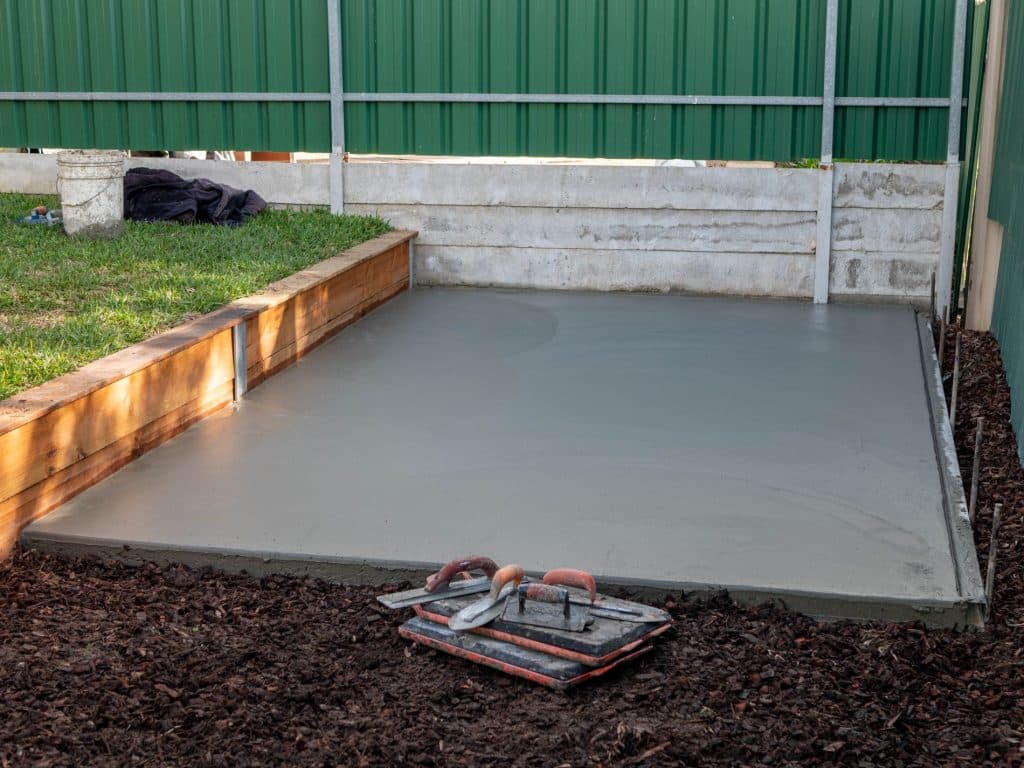
What You’ll Need
Materials
- Concrete – Forms the main foundation, creating a strong, stable and durable base
- Timber for shuttering/formwork – Used to create a temporary frame that holds the wet concrete in place until setting
- MOT Type 1 or hardcore sub-base – Provides a firm, well-drained layer beneath the concrete, crucial to prevent sinking
- Damp proof membrane (if appropriate) – Helps reduce moisture rising through the concrete
- Reinforcement mesh (for larger sheds if required) – Strengthens the concrete and helps minimise the risk of cracking under heavier loads
Tools
- Spade – Needed for digging out the area and removing soil to the required depth
- Rake – Used to level and spread the sub-base evenly before compacting
- Spirit level – Ensures the finished concrete surface is completely level
- Wheelbarrow – Makes it easier to transport concrete, aggregate and other materials around the site
- Tamper or plate compactor – Compacts the sub-base to create a stable foundation prior to pouring
- Float and trowel – Used to smooth and finish the concrete surface
- Tape measure – Allows you to accurately mark out the base and check dimensions throughout the project
How to Make a Concrete Base for a Shed
Step 1: Mark Out the Area
Measure the shed footprint carefully and mark the area using string lines and pegs. Allow a small overhang around the edges for additional stability and protection.
Step 2: Excavate the Ground
Remove all vegetation and topsoil before digging down to the required depth. Ensure the excavation is level and clear of loose material before adding the base layers.
Step 3: Prepare the Sub-Base
Add a layer of compacted hardcore or MOT Type 1 to create a stable foundation. Compact thoroughly and check the levels to ensure an even concrete base.
Step 4: Install the Formwork
Construct timber shuttering around the excavation to contain the concrete. Check that the frame is square, level and securely fixed to prevent movement during pouring.
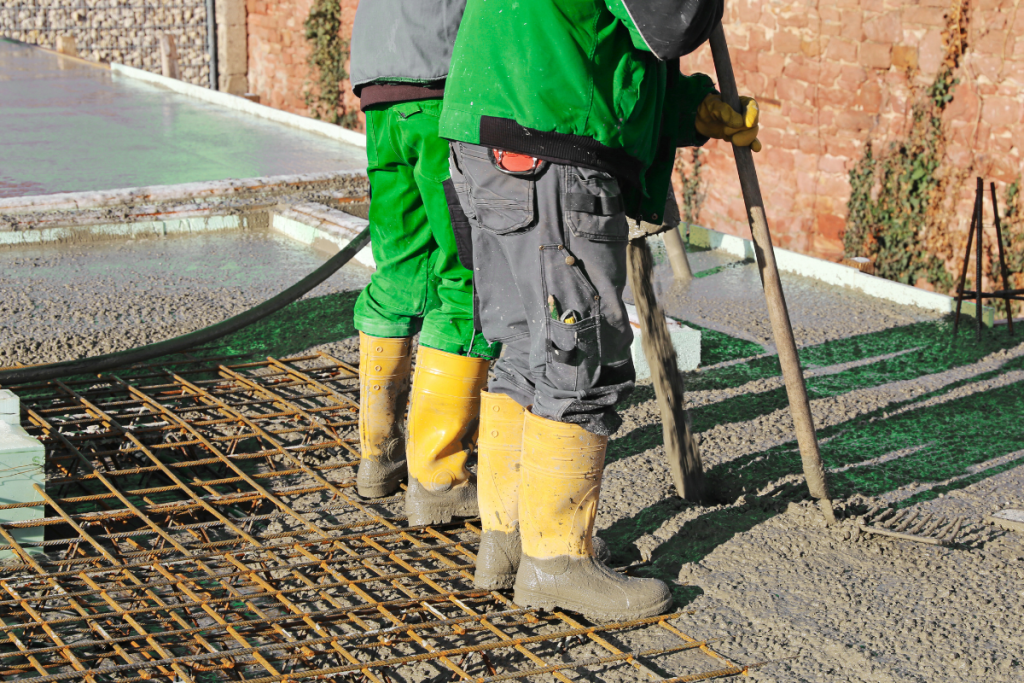
Step 5: Pour the Concrete
Pour concrete evenly across the prepared base area, working carefully to avoid gaps. Use a straight edge to level the surface and finish smoothly with a float.
Step 6: Allow the Concrete to Cure
Protect the concrete surface while it cures by keeping it free from damage and heavy loads. Allow the recommended curing period before placing the shed on the base.
How Thick Should a Concrete Shed Base Be?
A standard concrete shed base should typically be around 100 mm (4 inches) thick, which is suitable for most garden sheds and storage buildings.
However, larger sheds, workshops or heavier structures may require a thicker concrete slab to provide additional strength and support. The correct thickness depends on a number of different factors which include the size of the shed itself, its intended use, potential weight and ground conditions.
For larger or more complex structures, seeking professional advice can help ensure the foundation is suitable and long-lasting.
Common Mistakes to Avoid
Skipping the Sub-Base
By failing to install a proper sub-base layer, movement, sinking and general settlement can all be caused over time. Ensuring a stable foundation layer will help to extend the lifespan and overall performance of the concrete base itself.
Pouring Concrete Too Thin
Pouring concrete below the recommended depth can cause cracking, weakness and failure under load. Always ensure the slab thickness is suitable for the shed size and use.
Not Checking Levels
An uneven concrete foundation can make shed installation difficult and affect stability. Use a spirit level throughout preparation and pouring to achieve a flat, accurate surface.
Installing the Shed Too Early
Making sure fresh concrete is set is always crucial. Whether you are installing foundations for a building, fixing a crack in a surface or anything else in between. Placing a shed on top of concrete before it has cured properly can cause substantial damage.
Choosing the Right Concrete for Your Shed Base
Choosing the right concrete solution for your proposed shed is essential for ensuring a durable foundation. Options such as ready mix concrete, volumetric concrete and other pre-mixed solutions can all be used. For more advice on how to make a concrete base for a shed, contact the team at GB Concrete & Pump today to make the right choice for your upcoming project.
FAQs
How thick should a concrete shed base be?
A concrete shed base should usually be around 100 mm thick for most garden sheds. Larger structures or heavier loads may require a deeper slab for added strength and stability.
What type of concrete should I use for a shed base?
Use a suitable concrete mix designed for foundations and outdoor use. Ready mix concrete offers consistent quality, accurate mixing and reliable strength for a long-lasting shed base.
How long should I leave a concrete shed base before building on it?
Allow the concrete sufficient time to cure before installing your shed. While it may harden quickly, waiting for proper curing ensures maximum strength and prevents damage.
Can I pour a concrete shed base myself?
Knowing how to make a concrete base for a shed can be useful for smaller structures as a DIY project with careful preparation and the right tools. Larger bases may benefit from professional concrete supply and expert advice.
Popular Articles


